Article
Running in the Heat: How It Slows You Down and How to Adapt
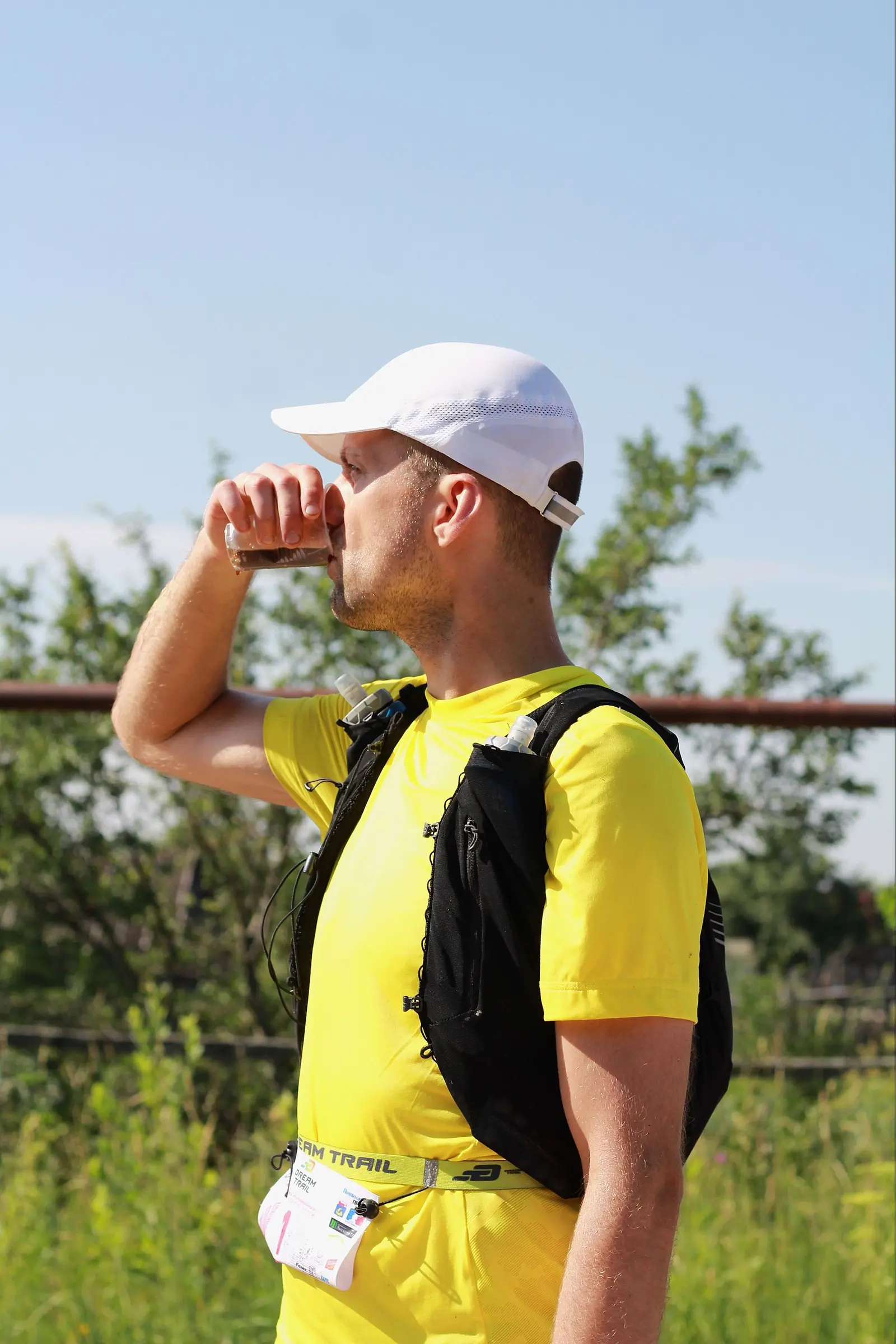
On a hot day, the pace that felt easy last week will feel hard, and the pace that felt hard will feel impossible — and that's not a fitness problem, it's physics. Your body has to do two competing jobs at once when you run in heat: send blood to your working muscles and send blood to your skin to shed heat. On a cool day those jobs don't fight each other much. On a hot, humid day they compete directly for the same limited supply of blood, and something has to give. Usually it's your pace. This article covers what heat actually does to your running, roughly how much slower you should expect to be, how long it takes your body to adapt, straightforward hydration advice, smart tactics for hot-weather training, and — because this matters more than any pacing tip — the warning signs that mean you need to stop running and cool down immediately, not push through.
What heat does to your body mid-run
Running produces heat as a byproduct — a lot of it, since muscles are only around 20-25% efficient and the rest of the energy you burn comes out as heat that has to go somewhere. On a cool day, your body sheds that heat easily: blood carries it to your skin, sweat evaporates, heat leaves. On a hot day, the temperature gradient between your skin and the air shrinks, so heat transfer by simple radiation and convection slows down, and your body leans harder on sweating and evaporation to do the job instead.
That's where humidity becomes the real villain, more than raw temperature. Sweat only cools you when it evaporates — sweat that drips off you without evaporating does nothing for your core temperature, it just costs you fluid. High humidity means the air is already close to saturated with water vapor, so your sweat evaporates more slowly, and the same sweat rate cools you a lot less. This is why a humid 24°C (75°F) morning can feel and perform worse than a dry 29°C (85°F) one — the thermometer alone doesn't tell the whole story.
Meanwhile, your cardiovascular system is juggling two demands from one blood supply: working muscles want oxygen-rich blood, and your skin wants blood flow to dump heat. Your heart rate climbs to try to serve both at once, so at the exact same pace you'd run on a cool day, your heart rate is measurably higher on a hot day — which is your body's honest signal that the same effort now costs more.
How much slower, roughly
There's no exact formula for this — humidity, sun exposure, wind, your own heat tolerance, and how hydrated you are all move the number — but coaches commonly use a rough guideline for how much a given temperature above a comfortable baseline slows your pace at a fixed effort level:
| Temperature | Typical pace cost | What it feels like |
|---|---|---|
| Up to 15°C (59°F) | No meaningful cost | Ideal running temperature for most people |
| 15-19°C (59-66°F) | About 1-3% slower | Barely noticeable, more sweat than usual |
| 19-24°C (66-75°F) | About 3-5% slower | Effort starts to feel disproportionate to pace |
| 24-29°C (75-84°F) | About 6-10% slower | Clearly harder; hydration and pacing discipline matter now |
| 29°C+ (84°F+) | 10%+ slower, or reconsider the session | High heat-illness risk, especially with humidity or direct sun |
Treat that table as a planning guideline, not a formula to trust to the second — high humidity or full sun exposure pushes you toward the worse end of each band, and low humidity with shade pushes you toward the better end. Here's how to use it: say your goal marathon pace, worked out on the pace calculator, is 5:00 /km. If race day or a key long run lands on a 26°C (79°F) morning, a realistic same-effort pace is roughly 8% slower — about 5:24 /km, not 5:00 /km. Chasing 5:00 /km anyway doesn't make you fitter, it just means you're running at a meaningfully harder effort than your training prepared you for, and the second half of the run is where that bill comes due.
Acclimatization: how long it actually takes
Heat tolerance is trainable, and the timeline is more concrete than most people expect. Repeated heat exposure — not necessarily hard running, just being active in the heat — drives real physiological adaptations: your blood plasma volume expands, so your heart doesn't have to work as hard to move the same amount of blood; you start sweating sooner and more heavily, which cools you faster; and your sweat becomes more dilute, so you lose fewer electrolytes per liter.
Most of that adaptation happens fast, then levels off:
| Days of heat exposure | What's happening |
|---|---|
| Days 1-4 | The steepest gains: plasma volume expansion and earlier sweat onset happen fastest here |
| Days 5-10 | Sweat rate and composition keep improving; heart rate at a given pace keeps dropping |
| Days 10-14 | Most of the adaptation is complete for a given heat level; further gains are marginal |
The practical version: if you know you're racing somewhere hot, or summer just arrived, give yourself about two weeks of easy exposure — training outdoors in the heat rather than defaulting to the treadmill or waiting for evening — before you expect your body to have caught up. Acclimatization is also fairly specific to the heat level you've trained in; someone who's adapted to 25°C isn't automatically ready for 35°C, though the adaptation transfers partially. And it fades: about a week without heat exposure and you lose a meaningful chunk of what you built, which is worth remembering if a heat wave breaks for a while before your race.
Hydration and electrolytes, without the bro-science
The advice here doesn't need to be complicated. A few things that actually matter:
Drink to thirst on most runs. For runs under an hour in ordinary conditions, thirst is a genuinely reliable guide — you don't need a spreadsheet. The old advice to force-drink on a fixed schedule regardless of thirst has fallen out of favor because it can cause its own problem, hyponatremia (dangerously diluted blood sodium), in the rare cases where people overdo it.
Take fluid and electrolytes seriously on long or hot efforts. Past about 60-90 minutes in real heat, sweat losses add up enough that thirst alone can lag behind what you actually need, especially for heavy sweaters. This is where a sports drink or electrolyte tablet with sodium earns its place — plain water alone, in large volumes, can dilute your blood sodium if you're sweating heavily and drinking heavily for hours, so pairing fluid with some sodium matters more than the fluid volume by itself.
Weigh yourself before and after a long hot run once or twice. This is the closest thing to an actual data point you can get without a lab: each kilogram of weight lost during a run is roughly a liter of fluid you didn't replace. It tells you, specifically for your own sweat rate, roughly how much you should be aiming to drink on similar runs — a number that varies a lot between individuals, which is exactly why generic "drink X ml every 20 minutes" advice is a poor substitute for knowing your own number.
Pre-hydrating the morning of a hot race is reasonable; over-hydrating isn't. A normal glass or two of water or an electrolyte drink beforehand is sensible. Chugging a large volume "just in case" doesn't give you a meaningful buffer and mainly gives you a full bladder.
Time-of-day and route tactics
Beyond hydration, a few practical choices do more for a hot-weather run than anything you drink:
Run early or run late. Air temperature in most climates peaks mid-afternoon and is at its lowest an hour or so after sunrise, so an early-morning or after-sunset run can be several degrees cooler than the same run at 2pm — often enough by itself to move you down a whole row in the pace-cost table above.
Choose shade over sun where you can. Direct sun adds a real heat load on top of the air temperature — a shaded tree-lined route or an early hour where the sun angle is low will consistently feel easier than open pavement in full sun, even at the same air temperature.
Adjust the session, not just the pace. If a hot day lines up with a hard workout, it's often smarter to keep the effort honest — using perceived effort or the pace zones calculator rather than a fixed pace target — and accept slower numbers, or shift the hard session to a cooler part of the day and keep the heat-day run easy. Trying to hit a cool-weather pace target on a hot day is the single most common way heat training goes wrong.
Dress for evaporation, not modesty. Light-colored, loose, moisture-wicking fabric helps sweat evaporate instead of sitting on your skin; a hat and sunglasses cut the direct heat load from the sun on your head and eyes.
Heat illness warning signs — stop, don't push
Slower pace and heavier sweating are normal heat responses. The signs below are not — they mean your body's cooling system is being overwhelmed, and they're a stop signal, not a slow-down signal. Heat exhaustion, if ignored, can progress to heat stroke, which is a genuine medical emergency.
- Heavy sweating that suddenly stops or your skin feels unusually cool and clammy despite the heat — this can signal your body is losing its ability to regulate temperature.
- Dizziness, lightheadedness, or a headache that doesn't ease when you slow down.
- Nausea or vomiting during or after a hot run.
- Confusion, disorientation, or behavior that seems "off" — to yourself or, importantly, as observed by someone running with you, since confusion is a symptom that's often easier for others to spot than for the person experiencing it.
- A racing heart rate or breathing that stays elevated well after you've stopped and rested.
- Hot, flushed, dry skin with no sweating at all, combined with any of the above — this combination in particular is a heat stroke warning sign and needs immediate medical attention, not home remedies.
If you notice any of these, stop running immediately, get to shade or air conditioning, remove excess clothing, and cool down actively — water on the skin, ice packs at the neck and armpits if available, sipping fluids if you're alert and able to swallow safely. If symptoms are severe, don't improve quickly, or include confusion or a lack of sweating despite heat, treat it as a medical emergency and get help rather than waiting to see if it passes on its own.
Getting started
The single biggest mindset shift for hot-weather running is this: your pace on a hot day is not a fitness measurement, it's a physics problem, and fighting it with willpower instead of adjusting for it is how people end up in real trouble. Expect roughly the slowdown in the table above, give your body a couple of weeks of heat exposure before you expect to have adapted, drink to thirst most days and take sodium seriously on long hot efforts, and treat the warning signs in the last section as absolute stop signals, not suggestions. Do that, and heat becomes an inconvenience you plan around — not a risk you run into.