Article
How to Choose a GPS Running Watch: A Buyer’s Framework
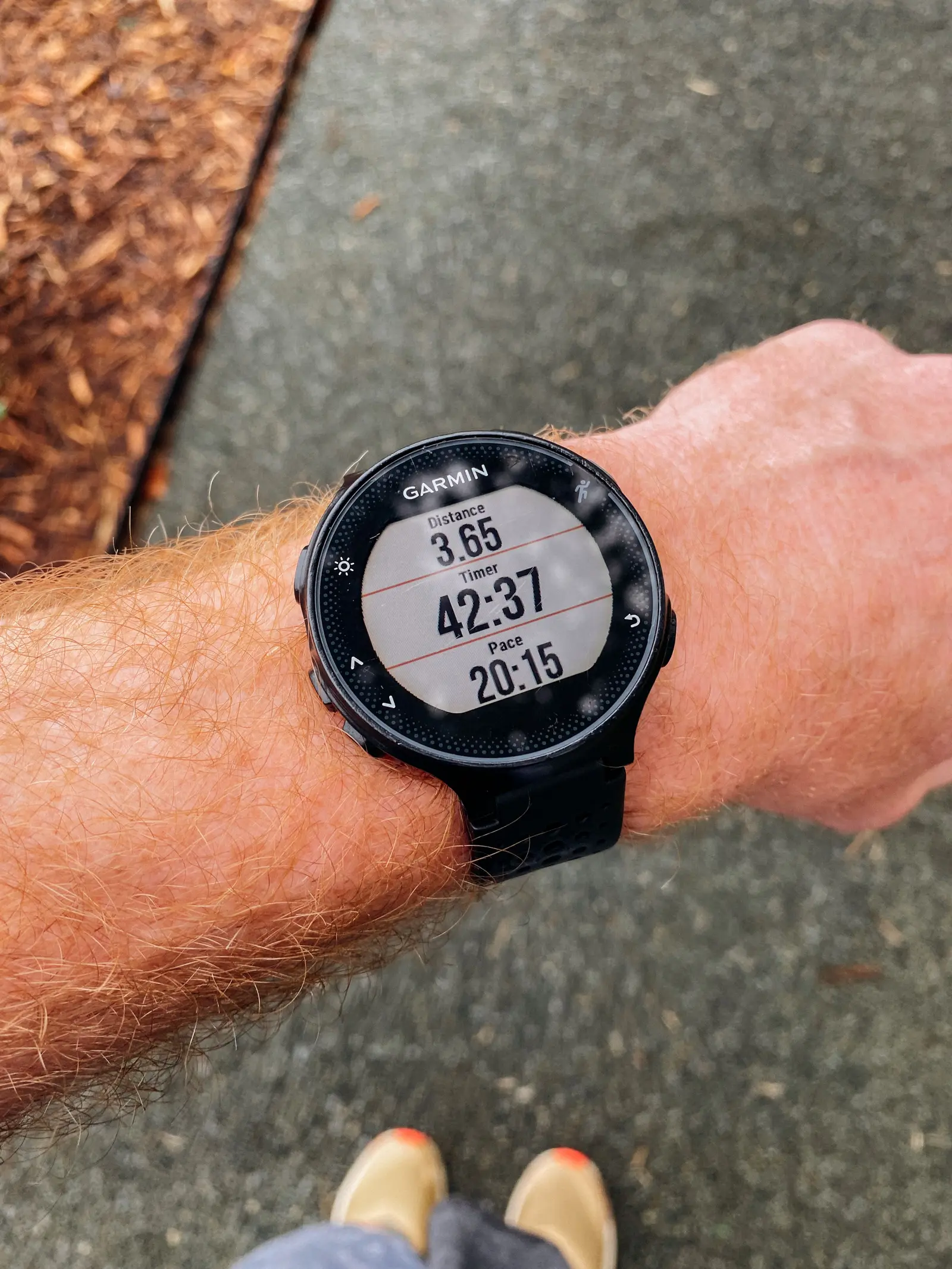
Every running watch brand's marketing page reads the same way: "the most advanced running watch we've ever built," a wall of acronyms, and a price that's supposed to feel justified by all of it. Strip away the marketing and nearly every GPS running watch on the market is doing the same core job with the same handful of sensors — a GNSS chip to track where you are, an optical sensor to estimate your heart rate, a battery, and a screen. What actually differs between a $150 watch and an $800 watch is accuracy, battery life, build quality, and how much software is layered on top of that same basic sensor package. This is a buying framework, not a model-by-model verdict — it's meant to help you figure out which specs matter for the kind of runner you actually are, so you can read any watch's spec sheet and know what to weigh and what to ignore.
What every GPS watch is actually doing
Strip the branding away and a running watch does four jobs: it tracks your position via satellite (GNSS) to calculate distance and pace, it estimates your heart rate optically through your skin, it stores that data and shows it to you in real time, and it syncs it to an app afterward. Everything else — training load scores, recovery advice, race predictions, sleep tracking, music storage — is software built on top of that same core data. That's worth knowing because it reframes the buying decision: you're mostly paying for how well those four core jobs are done, plus how much extra software you get, not for some categorically different technology at the high end.
Features that matter, by runner type
Not every runner needs the same things from a watch. What matters to a first-time 5K runner and what matters to someone training for a mountain ultramarathon barely overlap.
| Runner type | What actually matters |
|---|---|
| New runner, casual training | Accurate pace/distance, simple screen, decent battery for a few runs between charges — most of the premium features go unused |
| Structured training for a road race | Reliable GNSS accuracy for pacing, easy zone/interval workout setup, HR accuracy good enough to trust for zone training |
| Ultra/trail runner | Multi-day battery life in GPS mode, altitude/route features, rugged build — everything else is secondary to "does it survive and last" |
| Data-driven / multisport athlete | Training load and recovery metrics, multisport tracking, app ecosystem and export options — worth paying up for if you'll actually use the analysis |
If you don't recognize yourself clearly in one row, you're probably the first one — most runners get more value from a reliable, simple watch than from a feature-dense one they never fully explore.
GNSS accuracy: the spec that actually affects your data
GNSS is the umbrella term for satellite positioning systems (GPS is the American one; GLONASS, Galileo, and BeiDou are others). Watches that connect to multiple satellite systems at once generally lock on faster and hold a more accurate track, especially under tree cover, between tall buildings, or in narrow canyons where a single-system watch can lose the signal or bounce around. This is the spec most worth paying attention to if you care about accurate pace and distance — a watch that reports your splits as significantly faster or slower than reality on tricky terrain makes every other feature built on top of that data (training load, race predictions) less trustworthy too. Multi-band or dual-frequency GNSS, found on some higher-end watches, further improves accuracy in exactly these tricky environments; it's a real, meaningful upgrade, not a marketing footnote, if you regularly run somewhere GPS signal struggles.
Battery life: match it to how you actually run
Battery life claims on spec sheets are almost always measured in the watch's most power-hungry full-GPS mode, and real-world battery life drops fast once you factor in music, always-on displays, or multi-band GNSS. The number that matters isn't the headline "up to X days" figure — it's the GPS-on battery life, since that's the mode you're actually using while running. A watch rated for a week of smartwatch use might only give you 15-20 hours of full-accuracy GPS tracking, which is plenty for daily training but not for a 30-hour mountain ultra. If you're training for anything beyond a marathon distance, check the GPS-mode battery number specifically, not the general "battery life" headline.
Wrist-based heart rate: useful, with real limits
Optical heart rate sensors measure blood flow changes through your skin using light, and they've gotten meaningfully better over the years — for steady, moderate-effort running, most modern optical sensors track reasonably close to a chest strap. Where they consistently struggle: fast-changing efforts like intervals, where the sensor can lag behind a rapid heart rate spike or dip; cold weather, where reduced blood flow to the skin makes the signal weaker; and looser watch fits, where movement between the sensor and skin introduces noise. If interval training by heart rate zone matters to you specifically, a chest strap paired to the watch will consistently outperform the wrist sensor — worth knowing before you assume the watch alone gives you lab-grade heart rate data. For steady efforts and daily heart rate trends, the wrist sensor is generally good enough.
Training metrics: what's actionable and what's noise
Most mid-range-and-up watches now report some flavor of "training load," "recovery time," or a readiness score. These are genuinely useful as a general trend indicator — a training load score that's been climbing for three weeks straight while your recovery time keeps extending is a legitimate nudge to back off, even without knowing exactly how the underlying formula works. Where they're weaker is as a precise prescription: the exact number of hours until "fully recovered," or the exact training load target, are estimates built on generalized models of how bodies respond to stress, not measurements of your specific physiology. Use them as a rough signal, not a rulebook.
Where a watch's data becomes genuinely useful is feeding into your own pace planning. A recent race result from the watch is exactly the kind of real number you want to run through the race time predictor to set realistic goals for your next distance, and once you know your current fitness, the pace calculator turns that into the actual splits you'll run on race day. The watch collects the raw data; the calculators turn it into a plan.
Marketing features vs. features that change your training
A few things worth separating from the genuinely useful list above, because they show up prominently on spec sheets but rarely move the needle on your actual running:
- Smartwatch extras (notifications, contactless payment, music storage) are convenient but have nothing to do with running performance — nice if you want one device for everything, irrelevant to your training.
- Proprietary "advanced" metrics with vague names (a brand-specific "performance condition" or "fitness age" score) are usually a repackaged combination of pace, heart rate, and training history into a single number — interesting as a novelty, not something to plan a training block around.
- Touchscreen vs. button controls is a preference question, not a performance one — buttons work better with sweaty fingers or gloves, touchscreens feel more modern, neither makes you faster.
- Screen resolution and always-on displays matter for everyday usability and readability mid-run, but don't affect the accuracy of the data underneath.
Budget tiers, generically
Without recommending specific models, the market roughly breaks into three tiers. Entry-level watches (roughly under $200) cover the core job well — accurate single-system GNSS, basic optical heart rate, simple pace and distance data — and are genuinely enough watch for most recreational runners. Mid-range watches (roughly $200-450) typically add multi-system GNSS, better battery life, structured workout support, and more developed training-load metrics — the sweet spot for anyone doing structured training for a specific race. High-end watches (roughly $450+) add multi-band GNSS, multi-day-plus battery life, more rugged builds, and deeper multisport and mapping features — genuinely valuable for ultra-distance and multisport athletes, mostly unused headroom for everyone else. If you're shopping and want to compare current options across these tiers, you can browse GPS running watches.
Getting started
Work backward from the runner-type table above, not from the most expensive watch in the store. Identify the two or three things that actually matter for how you train — GNSS accuracy in the terrain you run, battery life for the duration you run, heart-rate accuracy if you train by zones — and use those as your filter before anything else on the spec sheet. Everything the watch collects is only as useful as what you do with it afterward, and that's where a pace calculator or race predictor, not another sensor on your wrist, does the real work of turning data into a faster next race.